

Av. Paseo de la República 5662 Miraflores |
Lima - Peru - South America |
|
|
|
   |
|---|
| tours@vivatoursperu.com |
 + + 51 1 447-2057
 540-446-5580
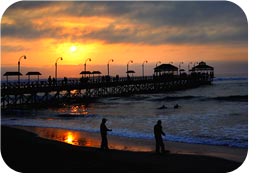 Although it is not as well-known as southern Peru, the northern coast has much to offer, from its many archaeological sites and elegant colonial cities, to the country's best beaches. Despite having grown to become Peru's second city, Trujillo has retained its colonial-era charm and is the perfect place from which to explore the region.
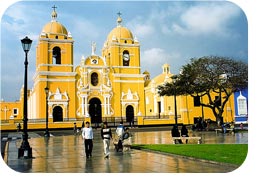
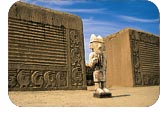 Trujillo was founded in 1534 and named after the birthplace of the conquistador Francisco Pizarro, and the central plaza and its surrounding mansions with their Andalusian-style balconies still conserve the city's colonial and republican heritage. Beyond the city, the small fishing village of Huanchaco is a favourite haunt of Peru's surfers, and in the surrounding desert lie the remains of the pre-Inca Moche and Chimú civilisations, in the enigmatic shape of huge mud-brick pyramids, temples and cities, all abandoned long ago to the ravages of time.
 The valleys around Trujillo have offered up many clues to researchers into Peru's pre-Hispanic past. People have lived in this arid coastal region since the time of the first hunter-gatherers, some 10,000 years before Christ. The diverse cultures which developed in the area have all left us evidence of their passing, at sites such as the Huaca de los Reyes and the Moche valley, the site of the pyramidal temples of El Sol y la Luna.
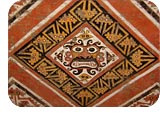 Moche ceramics are famous for their beauty and for the graphics with which they are decorated. The Moche culture was interrupted by the conquering Wari civilisation, which was followed by the rise of the Chimú from around the 11th century, whose capital was the adobe city of Chan Chan, now famous as the largest mud brick city in the Americas.
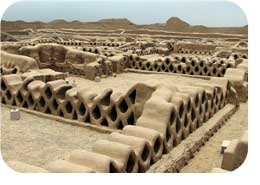 The Chimú kingdom grew to become a great empire, stretching from present-day Tumbes as far south as Supe. The Chimú were conquered by the Incas as they expanded north in the late 15th century under the leadership of the Inca Pachacuteq and his son Tupac Yupanqui. But the Incas' rule was also destined to be shortlived, as they themselves would be conquered by the Spanish who arrived in Peru in 1531.
Image Gallery All
Copyright ® - Viva Tours Peru
Lima Peru / 1994 - 2012